
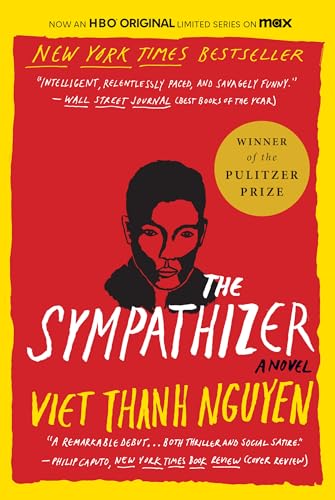
If you think your family reunions are awkward, wait until you read my review of a book about a guy who’s a communist spy in the middle of Los Angeles—while also trying to fit in with South Vietnamese exiles! Yes, I’m talking about The Sympathizer. Whether you’re into dark jokes, double-crossing, or just want to feel better about your own identity crisis, I’ve read it cover to cover (twice, because I missed a few things the first time—don’t judge me). Below, I’ll give you my honest thoughts: the good, the bad, and the bits that made me laugh so hard I spilled coffee on my favorite chair.
In a nutsheel
Alright, here it goes. The Sympathizer by Viet Thanh Nguyen is a wild and clever ride through the mind of a communist spy during the Vietnam War and after. The book, a mix of historical fiction and spy thriller, blends action, tricky politics, and a lot of very dark humor.
Nguyen takes you through themes like identity, loyalty, and what it means to belong. You get to see not just war, but also the mess that comes after—the struggles of being an immigrant in the USA and the confusion of living between two worlds. If you like books that make you think, laugh, and squirm at the same time, this one is for you. Trust me, I read it and couldn’t put it down (except to make a cup of very strong coffee).
The Sympathizer: Living a Double Life and Wearing Too Many Hats
Now, let me tell you—living a double life seems cool for about five minutes, then it’s a headache, especially if you’re the narrator in The Sympathizer. Viet Thanh Nguyen’s main guy is a half-French, half-Vietnamese spy with loyalty issues as big as my Uncle Bob’s Sunday BBQ. Our narrator isn’t just making tough choices now and then—he’s stuck swimming in betrayal and secrets like a goldfish in a bowl full of sharks.
On one hand, he’s a communist spy, taking notes and sending reports back to Vietnam. On the other hand, he’s working with South Vietnamese exiles and even getting a taste of the American Dream. I tried playing both sides once, sneaking dessert before dinner at my grandma’s house while promising to eat my peas. I got caught. The narrator? He’s got way more at stake. You really feel for the poor guy. Every handshake is a trap and every smile might be fake. He’s haunted by guilt and paranoia, and I started to question my own friends after reading this book. (No offense, Dave.)
Nguyen does a great job showing us how split loyalties aren’t just about politics. He makes you see how every friendship, every love, and even his own identity gets twisted up in his double life. The narrator’s loyalty isn’t split down the middle, it’s shredded like old homework. This keeps you hooked, because you never know when he’ll slip up or whose side he’ll choose next.
Next up, I’ll share my thoughts on how the Vietnam War keeps messing with your head, even years after the last helicopter flies away. It’s a real identity crisis, trust me.
Lasting Shadows: How the Vietnam War Shapes Identity in The Sympathizer
The Vietnam War never leaves the pages of The Sympathizer, and more important, it never leaves the minds of its characters. The war is like an invisible tattoo that everyone carries, shaping how they see themselves and each other. Even in Los Angeles, far from Saigon’s chaos, the war molds the daily lives of the Vietnamese emigrants. They try to build fresh starts, but the past sneaks in like a gecko through a window. Trust me—I’ve tried to ignore a gecko before. Can’t be done.
For our nameless narrator, the war turns his whole sense of self upside-down. One minute, he’s a loyal friend and devoted “son” to the General and the exiled community. The next, he’s a spy, haunted by both trauma and his mission. He doesn’t just lose a country—he loses the ability to know who he is. His memories of Vietnam mix with the headaches of life in America, and he ends up a stew of regret, nostalgia, and guilt. If I had a nickel for every time I questioned myself, well, I’d have a lot of nickels, but this guy would have a mountain.
The war scatters all the characters, making them question what it means to be Vietnamese. Is it speaking the language? Eating the food? Hating communism? No one has a clear answer, and their confusion spills into every corner of their new lives. The past isn’t a bad roommate here—it’s the landlord calling for rent.
If you think this all sounds serious, wait until you see what the author does with satire and dark humor. Buckle up—this next section is like finding a rubber chicken in a coffin.
Satire and Dark Humor: Laughing in the Face of Chaos
Let me tell you, “The Sympathizer” is not just a serious spy novel. Nope. Viet Thanh Nguyen shook things up with so much satire and dark humor that I found myself awkwardly giggling while questioning my own morals. The sympathizer (our narrator, secret communist and professional fence-sitter) looks at America and the exiled Vietnamese through the most biting, sarcastic lens you can imagine. He’s like the annoying friend who points out the spinach in your teeth, except the spinach is war, hypocrisy, and Hollywood clichés.
For example, Nguyen does not shy away from mocking both sides. Communists, capitalists—no one is safe. The narrator skewers Vietnamese generals who pretend to be strong leaders, yet freeze up at the sight of a cockroach. He pokes fun at self-important Americans, especially the film director whose Vietnam War movie is less Apocalypse Now and more Apocalypse How-Did-They-Approve-This-Script? If you ever wanted to see someone roast everybody and everything, this is your book. The dark humor cuts through what could’ve been a heavy story, making all the trauma weirdly… funny? In a “why am I laughing at this?” way.
I loved this side of the book, because even when things got tense, I was waiting to see who or what the sympathizer would rip on next. It kept the story fresh and made the harsh truths easier to swallow—like hiding medicine in chocolate pudding. And if you think satire is all fun and games, just wait until I tell you about the immigrant experience and those wild cultural clashes next!
How The Sympathizer Nails the Immigrant Experience (and Awkward BBQs)
Let’s be honest, moving to a new country is hard. Doing it while hiding your secret double life as a spy? That’s a whole new kind of stress. In The Sympathizer, our unnamed narrator is tossed into 1970s Los Angeles with nothing but his wits, his secrets, and a pretty questionable pair of pants. Watching him mingle with fellow Vietnamese exiles, American hopefuls, and the odd clueless Hollywood director is like watching your uncle try salsa for the first time—exciting, a bit painful, and always a little funny.
What really got me was the way Viet Thanh Nguyen shows cultural clashes without making anyone the bad guy (well, except for the actual bad guys). The narrator tries to hold on to his old self while picking up new habits, and it’s not smooth. There are language fumbles, awkward missteps, and moments where he’s just lost, both in the supermarket and in his own head. It reminded me of the time I tried to order coffee in Paris and accidentally insulted the barista’s grandmother. Classic Steve.
The best part? The book doesn’t just show the hardship. It also celebrates the weirdness and humor that comes from blending cultures, like when the narrator ends up at a party surrounded by people who think pho is pronounced “foe.” Painful, but very real.
If you like your immigrant stories with a side of sharp wit and painful honesty (and you don’t mind feeling a bit of second-hand embarrassment), The Sympathizer is a must-read. I recommend it with both thumbs up, even if you can’t pronounce all the food names.
Conclusion
Well, that’s all folks! ‘The Sympathizer’ gave me plenty to think about, plus a few laughs and even a little stomach churning. Viet Thanh Nguyen’s mix of spy thrills, dark humor, and honest talk about identity and war made for a ride I won’t forget soon (no matter how hard I try). The whole double life thing kept me on my toes, and the immigrant struggles hit close to home – like when I tried to fit in at my cousin’s weird Thanksgiving. The book does get dense sometimes, and some jokes fly over your head if you’re not careful, but it’s never boring. If you want a story that will make you laugh, squirm, and question your own split loyalties, this is it. Thanks for reading my review! Time to find another book to roast.