
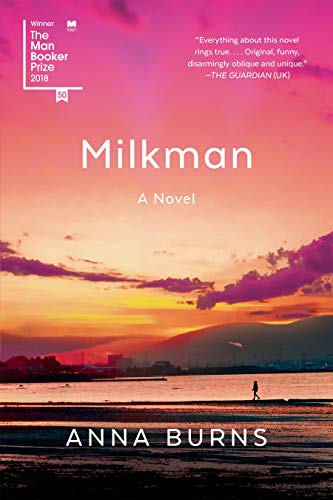
Alright, folks, gather around! This is my review of that one-of-a-kind book, Milkman. I got lost (almost literally) in its pages, thanks to a writing style that’s denser than my grandma’s fruitcake. If you like stories where nobody has a real name and everyone’s afraid of someone watching them, stick with me. I’ll walk you through the language, the paranoia, the voices (not the ones in my head for once), and just how big a part the city plays in all the madness. Let’s see if this book’s worth your time—or if you’ll just end up as baffled as I was half the time.
Milkman by Anna Burns: A Book Like No Other
In a nutsheel
Anna Burns gives us a strange and powerful story in her novel Milkman, which won the Man Booker Prize. The book is a mix of literary fiction and dark comedy, with a bit of political thriller for good measure. It follows an eighteen-year-old girl in an unnamed city (but let’s be real, it’s Belfast) during the Troubles. She just wants to live her life and read her books, but a creepy older man—known only as Milkman—starts following her around. That’s when things get messy and the gossip train leaves the station.
Themes of fear, paranoia, power, and womanhood run through the whole story like ants at a picnic. Burns’ writing style is one-of-a-kind: dense, a bit repetitive, but also playful and clever once you get used to it. Milkman digs into how communities control people, how rumors spread faster than my dog after a squirrel, and how it feels to be a young woman stuck in a scary place. Trust me, you won’t read anything else quite like it, but keep snacks handy for the brain workout!
Writing Style and Use of Language in Milkman Book
I’ll be real with you—if you’ve never met a sentence that goes on long enough to wrap around the block, you’re in for a treat with Milkman. Anna Burns writes like she’s running a marathon through language. She’ll drop a phrase, then run with it, then maybe take a detour for a snack before getting back on track. The writing style is dense, like trying to read while someone keeps moving your chair. But hey, who needs short sentences anyway?
Burns uses repetition as her main tool. At first, I thought my eyes were playing tricks. Characters don’t have names—they’re “Somebody McSomebody” or “maybe-boyfriend,” and it feels like everyone is in witness protection. The effect is both spooky and weirdly funny (especially if you’re the type who forgets names anyway). It adds layers of confusion, but also makes you pay attention, like when you try to remember if you turned off the oven. The style keeps you close to the main character’s mind, with all the circular thoughts and dodgy logic.
But here’s the thing: sometimes you want to yell, “Just tell me what’s happening!” The language gets so thick it’s like walking through mud in flip-flops. If you crave straight-forward writing, you might cry actual tears. But if you love words and want to live inside someone else’s muddled head for a while, this book’s language is a playground.
Next up—strap in! We’re heading into the land of fear and paranoia. And trust me, things are about to get even more interesting…
How Milkman Paints a City Full of Fear and Paranoia
I don’t know about you, but I’ve never worried that my neighbor’s cat might be spying on me for a shadowy government group. After reading Milkman, though, I did check behind my own curtains—just to be sure. Anna Burns doesn’t just tell you about fear and paranoia; she makes you live in it, like a long, sweaty bus ride where everyone is watching each other, and someone’s definitely eaten too many onions.
This book turns ordinary stuff into something to worry about. The sound of footsteps, a car parked a little too long, or the wrong person saying hello? All of it gets loaded with meaning. Burns shows how people in this city can’t let their guard down. Even our unnamed main character is always on edge. She’s worried about being noticed, about saying the wrong thing, about the milkman himself. I kept thinking, thank goodness I only have to worry about whether I remembered to put out the trash.
One thing I liked is how believable it feels. The paranoia seeps into every part of life, like a cold that no one can shake. The downside? Sometimes it’s hard to breathe as you read. I found myself peeking over my shoulder, half-expecting someone to call me ‘beyond-the-pale’ for eating toast at the wrong hour.
If you like stories where tension is so thick you could butter it, Milkman is perfect. And now, let’s get ready to meet the most colorful bunch of voices you’ll ever find on a bookshelf…
Distinct Character Voices in ‘Milkman Book’: A Real Page-Turner
Let me tell you, reading milkman book with my book club was like being dropped into a busy market where everyone whispers secrets, but only in their own style. Anna Burns gives each character such a unique voice that you could tell who was speaking even if you’d spilled coffee all over your Kindle and the names had smudged away!
The narrator, known only as “middle sister,” talks in a strange, winding way that sometimes made me question if I was reading a novel or eavesdropping on someone’s spiral of thoughts. I’ll be honest: at times, her rambling can get a bit much, but there’s a certain charm in the way you’re dragged along. Then there’s “maybe-boyfriend,” whose words seem to come out in a safe, half-whisper, like he’s always afraid of being caught talking. On the flip side, the mother is the kind who’ll fill every silence with chatter, whether you want it or not. And don’t get me started on Milkman himself! He barely speaks, but his quiet, watchful presence speaks volumes.
This variety of voices is a treat, especially if you like reading a book out loud and doing all the voices (my friends still can’t get my ‘third brother-in-law’ impression out of their heads). But, I’ll admit, sometimes it was tricky to keep up—there are no real names, so it takes a sharp mind (and maybe a cheat sheet) to remember who’s who.
Next up, we’ll wander through the streets and alleys themselves and explore how the setting shapes every wild, whispered word…
The Powerful Setting: How Place Shapes Milkman’s Story
If you read milkman book, you might feel like you need a map and a good pair of walking shoes. The story unfolds in an unnamed city, but let’s be honest, everyone knows it’s Belfast. Burns never says it out loud though. It’s like a game of hide and seek with geography, and I kept peeking around the corners for street names.
This setting is not just some boring backdrop. It’s like the story’s grumpy old neighbor, always watching and judging. The tension is thick enough to slice with the butter knife you forgot to wash last week. Every street, every wall, every pub adds to the main character’s stress. I once got lost in an IKEA and that felt peaceful compared to walking these pages. The city is full of suspicion, where people don’t just whisper, they whisper about everyone else whispering.
I loved how the city takes on a personality of its own. The setting makes the characters’ lives small and tight—people are scared to blink in case someone gossips about it. You can feel the pressure building, like my fridge after I stack too many sodas in it. If you remove the city, milkman book would be half the story it is.
So, do I recommend milkman book? Absolutely—for fans of stories where setting matters as much as the plot. Just don’t read it after getting lost in IKEA. You might never come out.
Conclusion
Well folks, that wraps up my review of Milkman. This book is not your normal walk in the park—unless your park is full of gossip, fear, and people with no actual names! Anna Burns gives you writing that’s thick as molasses and characters you sometimes want to shake. But I have to admit, she really nails the mood and makes you feel Belfast’s tension deep in your belly. If you like your books weird, wordy, and brimming with paranoia, go for it! But if you need a break from heavy brain workouts, maybe try a comic book instead. Thanks for sticking with me through this wild literary ride!