
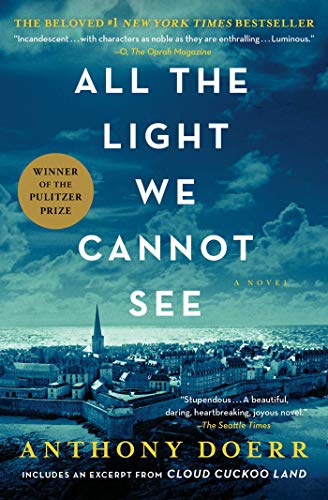
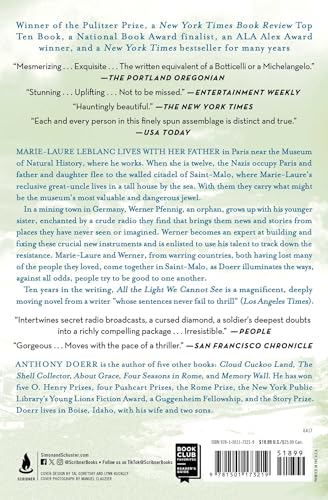
Alright folks, grab your snack of choice and settle in, because I’m about to review the much-talked-about book, ‘All the Light We Cannot See.’ If you’re wondering whether this one’s just another sad story set in WWII or something actually worth your late-night reading hours, you’re in the right spot. I’ll cover every bit that matters—storyline, pacing, character depth, themes, and the writing itself (with all my usual charm and crumbs on the sofa). Let’s see if this book really shines or just leaves you in the dark!
All the Light We Cannot See – A Bright Spot in Historical Fiction
In a nutsheel
All the Light We Cannot See by Anthony Doerr is a historical fiction book that takes us into World War II. The story follows two young people: a blind French girl and a German boy. Their lives twist and turn as war shakes their worlds.
This book shines with themes of hope, survival, and the beauty people can find even in ugly times. Doerr writes with feeling and skill, making heavy stuff feel human. If you like stories about tough choices, courage, and the ways people connect, you’ll find lots to think about here. Don’t worry—no spoilers from me!
Storyline and Pacing in ‘All the Light We Cannot See’
I’ll be honest, when I first picked up ‘All the Light We Cannot See’, I worried it might be one of those World War II stories where the pacing crawls like my grandma on ice. Boy, was I wrong. Anthony Doerr keeps the story humming, flipping back and forth between Marie-Laure, the blind French girl, and Werner, the German boy who builds radios (side note: I once tried building a radio—ended in a mini fire and a very unhappy cat). Even though the book leaps between points of view and time jumps like a toddler high on sugar, it somehow works. The back-and-forth keeps you hooked. I kept saying ‘just one more chapter’ until I realised I’d forgotten dinner. Who needs food when you have a tale set in a war-torn Europe?
The pacing is neither snail-speed nor sonic-fast. Doerr takes his time describing the little things, like a miniature wooden house or a fresh croissant (seriously, don’t read when hungry), but never so long that you consider checking your phone instead. Sometimes, though, I found myself wishing the story would move along a little quicker—parts of Marie-Laure’s time in the walled city of Saint-Malo do drag, especially if you’re itching for Werner’s sections, which get tense as a tightrope.
Still, the storyline is clever, weaving mystery and hope together without being predictable. The gradual spill of secrets keeps things interesting, making you care about what happens next. Next up, I’ll chat about the characters, and let me tell you—these folks have more layers than a lasagna at my family reunion!
Rich Characters in ‘All the Light We Cannot See’: Peeking Behind the Curtain
When I first picked up All the Light We Cannot See, I was bracing myself for the usual cardboard cut-out war heroes. Imagine my delight when I met Marie-Laure and Werner! These two dynamite souls pop right off the page. Marie-Laure, the blind French girl who can navigate Saint-Malo better than I can find my keys, is more than just clever. She feels real, from her stubborn hope to her wobbly moments of fear. I actually found myself rooting out loud for her during a particularly tense scene—my cat was not impressed.
Werner, on the other hand, is a German boy who loves radios and math more than any normal person. His slow tumble into the war machine is both heartbreaking and relatable. He’s torn between his own dreams and the heavy weight of duty. I think we’ve all been there (minus the Nazi training, hopefully), pulled in two directions. Even the side characters get a fair shake. From Madame Manec who had me wishing she’d adopt me, to the sinister Sergeant Major von Rumpel who makes your skin crawl, the whole cast is packed with quirks and motivation. Nobody here is perfect, and that’s a good thing. It’s like life: messy, complicated, and sometimes completely unfair. The only thing I’d nitpick is that a few characters fade away once their purpose is done—kind of like my old socks.
Next up, let’s get out our magnifying glasses and dig into the book’s big, messy ideas about war and survival—strap in, it’s quite the ride!
Themes of War and Survival in All the Light We Cannot See
Let’s talk about war. No, not the family kind where your brother ate your secret snack stash, but the real, world-changing kind! In All the Light We Cannot See, Anthony Doerr doesn’t hold back when it comes to the themes of war and survival. This book sets us right inside the chaos. You’ve got Marie-Laure, who is blind and learning to survive in Nazi-occupied France. Every meal, every step, every strange sound—she has to fight for it, and not just with army guys but with fear itself. I felt my heart squish up every time she tried to get bread without tripping over a bucket or a spy.
Then, there’s Werner, a German orphan who’s good with radios. Instead of living a nice life playing video games (okay, it’s the 1940s, but let me dream), he’s forced into the Hitler Youth. His journey is full of moral potholes. At times I wanted to yell at him, but I also understood—war squeezes people like old toothpaste tubes. Doerr makes sure we see how survival isn’t just about running away from bombs but holding onto hope. The war tears families apart, builds odd friendships, and tosses ordinary folks into extraordinary messes.
Doerr uses little details—a loaf of bread, a model city, secret codes—to show how people survive, not just in body but in spirit. I found myself rooting for both characters, even when the odds looked worse than my haircut during quarantine. Next up, let’s look at the author’s writing style and how he describes things so well you can almost taste the fear (or the baguettes).
All the Light We Cannot See: A Feast for the Senses
Let me tell you, reading All the Light We Cannot See is like eating a giant, fancy cake: sometimes you want to slow down and savor the good bits, and sometimes it’s so rich you need a glass of water. Anthony Doerr really loves his details. He describes smells, sounds, and sights in a way that kind of makes you feel like you need to clean your glasses, just in case you’re missing something. If you love walking through a French city street with your nose, eyes, and ears—without ever leaving your couch—this book’s got you covered. Bathrooms so tiny you bump your elbows, radios humming in the dark, crusty bread that probably tastes better than my actual breakfast—Doerr makes all of it come alive.
I’ve gotta admit, sometimes I was reading a page and thinking, “Man, that’s a lot of metaphors for a lump of coal,” but somehow it always works. There’s a poetic thing going on, but it doesn’t feel stuck up. Like your friend who can describe a sandwich so well that you want to eat it, even if you’re not hungry. The short chapters keep things moving, so even if you get lost in the descriptions (I sure did, more than once), you’re right back in the story pretty quick.
Now, if you’re more of a ‘just the facts’ kind of reader, you might get a little bogged down by all the tasty words. But for folks who like to get lost in a scene, this writing style is a total treat. I absolutely recommend All the Light We Cannot See—even if you need a snack while you read.
Conclusion
And there we have it, folks—my review of All the Light We Cannot See is complete! Anthony Doerr takes us on a wild, emotional ride through war, survival, and the tiny flickers of hope that help us carry on. The characters are deep, the writing is beautiful (sometimes almost too beautiful—I got lost counting the types of sea snails), and the story sticks with you long after you close the book. Sure, it can get a bit slow in the middle, and I still don’t know what happened to that one side character (seriously, where did he go?), but it’s a moving and memorable read. If you like powerful stories with real heart, give this one a go. Just don’t blame me if you end up rooting for the snail.